16 min read
Every month I like to look back at the games I played during that month. Usually, they are games released during that month, but for quiet months like January, I might replay a classic or check out something I’ve missed in previous years. This is the first time I’ve written a monthly roundup, having previously focused on shorter bi-weekly roundups. Hopefully, this format allows me to get into greater detail on the games I’ve been McLovin’ for the last four or so weeks.
CRUEL
CRUEL is available on Steam.
An ominous voice reaches out to you through the dark, “finally, some new blood” it says. It knows what you want–who you want to kill. It asks for something in return. CRUEL is an enigmatic little game. If you were to take the grunge of Condemned: Criminal Origins, the speed and movement of a game like Severed Steel and a whiff of the roguelike formula you’d be approaching what CRUEL is but the pieces aren’t all there.
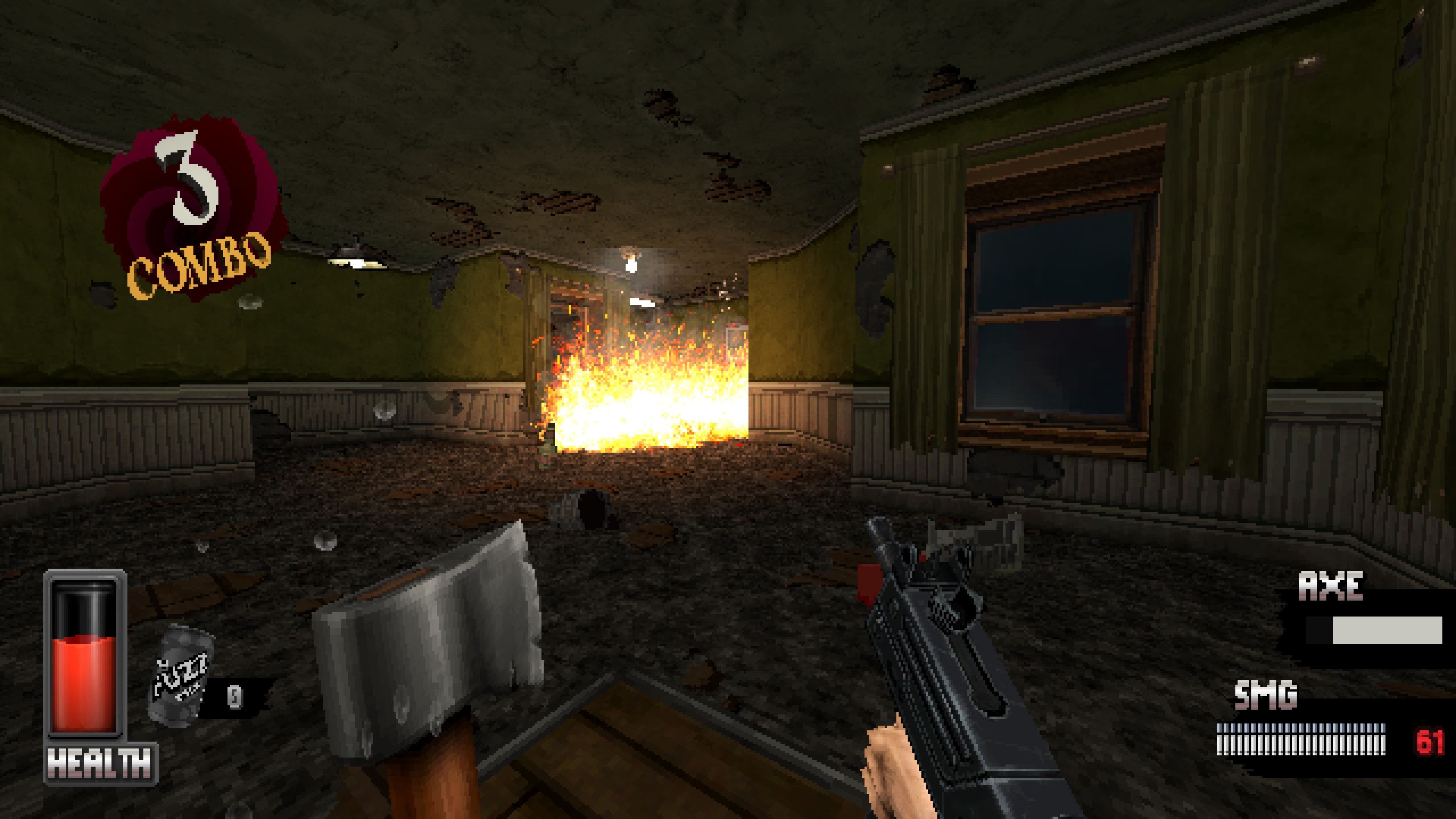
You start your run in an elevator. Not long after departing, a fire breaks out and begins to spread through the level. It’s a creative incentive to keep the player moving and meshes well with the fast-paced movement. You don’t open doors, you kick them down; sliding gives you a massive speed boost; kicking enemies sends them flying to the other side of the room or through windows. It’s chaotic, it’s rhythmic and it’s fun. The low-fidelity graphics ensure that it runs silky smooth and having just invested in a 360Hz monitor this has been a real feast for the eyes.
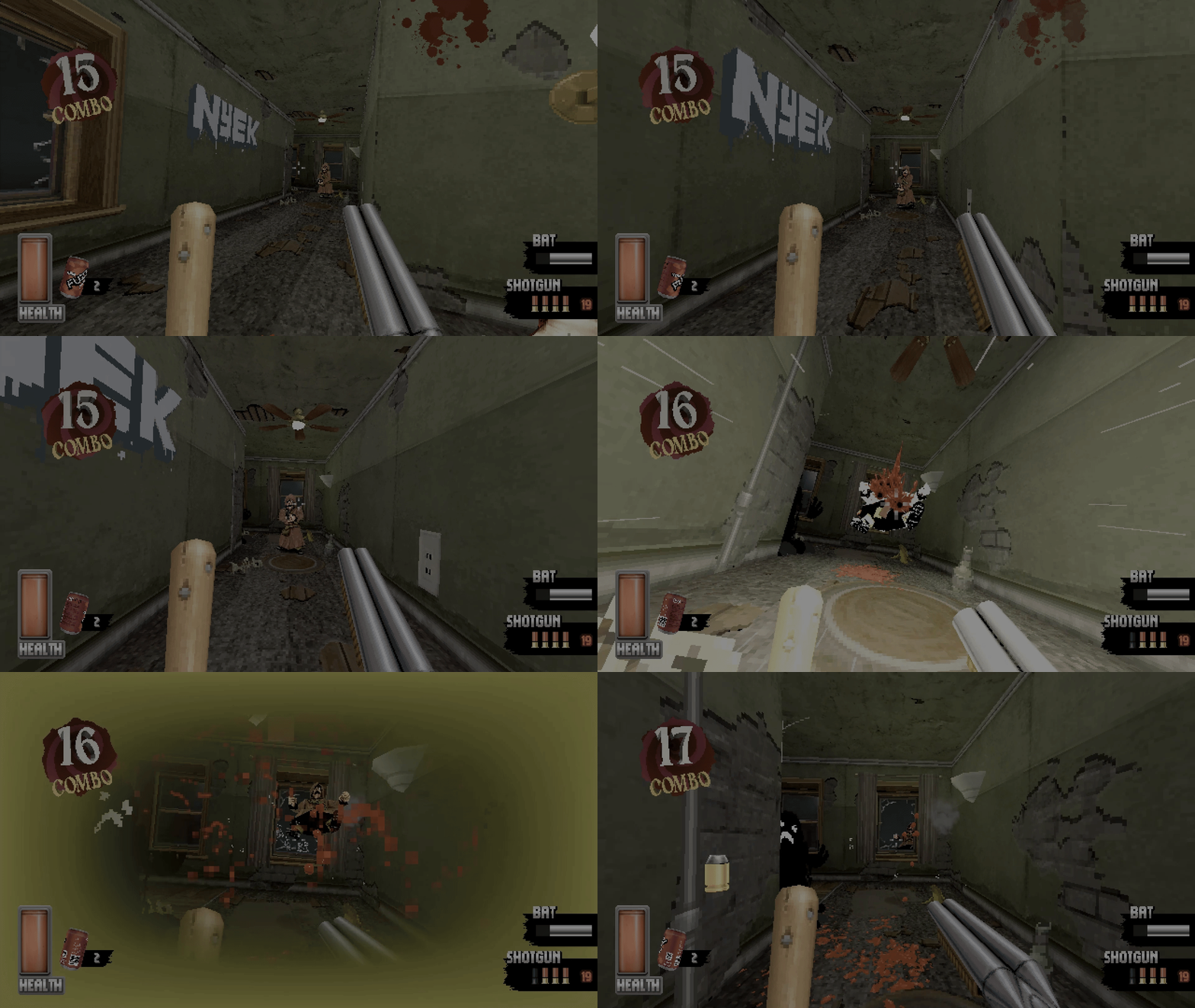
Everything in CRUEL has been built around style and speed. Melee weapons have a satisfying heft to them and can be thrown at a high velocity to separate cultists’ heads from their shoulders. Guns have a weighty kick to them, sending enemies hurtling back and, just to flex, if you try to reload a full weapon you flip it instead. Forget the rule of cool, this is all about the rule of CRUEL. If CRUEL fucks, it fucks loud, it fucks often and it fucks with the door open.
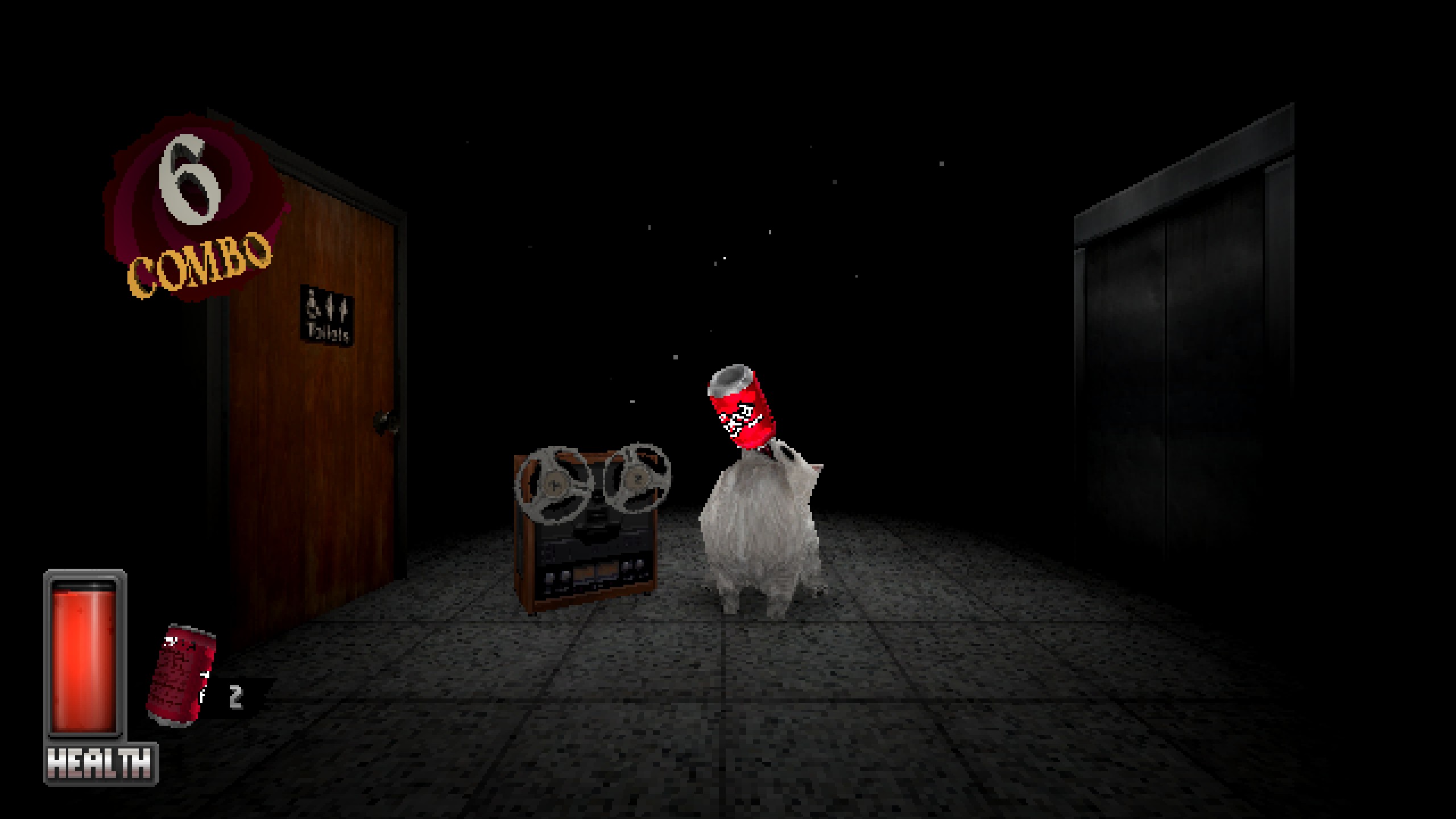
It’s a very weird game. Enemies come in all sorts of shapes and sizes–whether it’s your bog-standard cultist, a chainsaw-wielding maniac or an SMG-toting pig monster. It reminds me of Duke Nukem 3D and games of that era which erred towards a sort of ultra-violent Saturday morning cartoon. The music is a high-intensity industrial synthwave that gets the blood up. It reminds me a lot of the band Sound Stabs. CRUEL melts down all of these base components into a primordial ooze, then serves it to you in a half-full glass of dry whiskey that already has a few cigarette butts in it, and tells you to drink the whole thing. It’s an absolute blast and well worth the AU$14.50 I paid for it. Well recommended.
Slam some CRUEL energy drink here
Fallout: New Vegas
Fallout: New Vegas is available on Steam, GOG, PC Game Pass and Xbox Series S/X via backward compatibility.
Pretty much everything that can be said about Fallout: New Vegas has already been repeated ad nauseam by the vast majority of game critics. It’s lightning in a bottle, a diamond formed under the immense pressure of an 18-month development cycle, a mishmash of ideas and ambitions that take turns bringing the whole experience to new heights but also its lowest lows. It’s a flawed game, and that’s what makes it perfect. Not unlike the many factions of the Mojave, you have to take the good with the bad and the bad with the worse. In December, I installed a mod called “A Tale of Two Wastelands”, a mod that combines Fallout 3 and Fallout: New Vegas into one experience–as well as a handful of other light mods that stabilize, but don’t inherently alter, the core experience.

You begin the whole thing in Vault 111. You’re born, you grow up in the vault, your dad goes out for milk and you have to go find him. The mod starts itself off in Fallout 3 for lore reasons. You play as the lone wanderer (Fallout 3’s protagonist) even after you travel to New Vegas’ Mojave Wasteland, some dialogue options have even been changed to reflect this. After a while, you can find a train station that can be fixed up, allowing you to travel between the Capital and Mojave wastelands. It was really interesting being able to compare the two games side-by-side. Fallout 3 inherits the gameplay improvements of New Vegas like being able to use sights on weapons, the faction system, hardcore survival mode and a few other bells and whistles. I love Fallout 3, but playing it side by side with New Vegas really highlighted a lot of its shortcomings. One of the most notable differences is in dungeon design. Fallout 3’s dungeons all felt really over-complicated, difficult to navigate, and lacking in personality and fleshed-out stories. There are fewer dungeons in New Vegas, but they all feel so much more refined. The level design is much clearer and less maze-like, locations will consistently have stories to tell or unique loot to find.
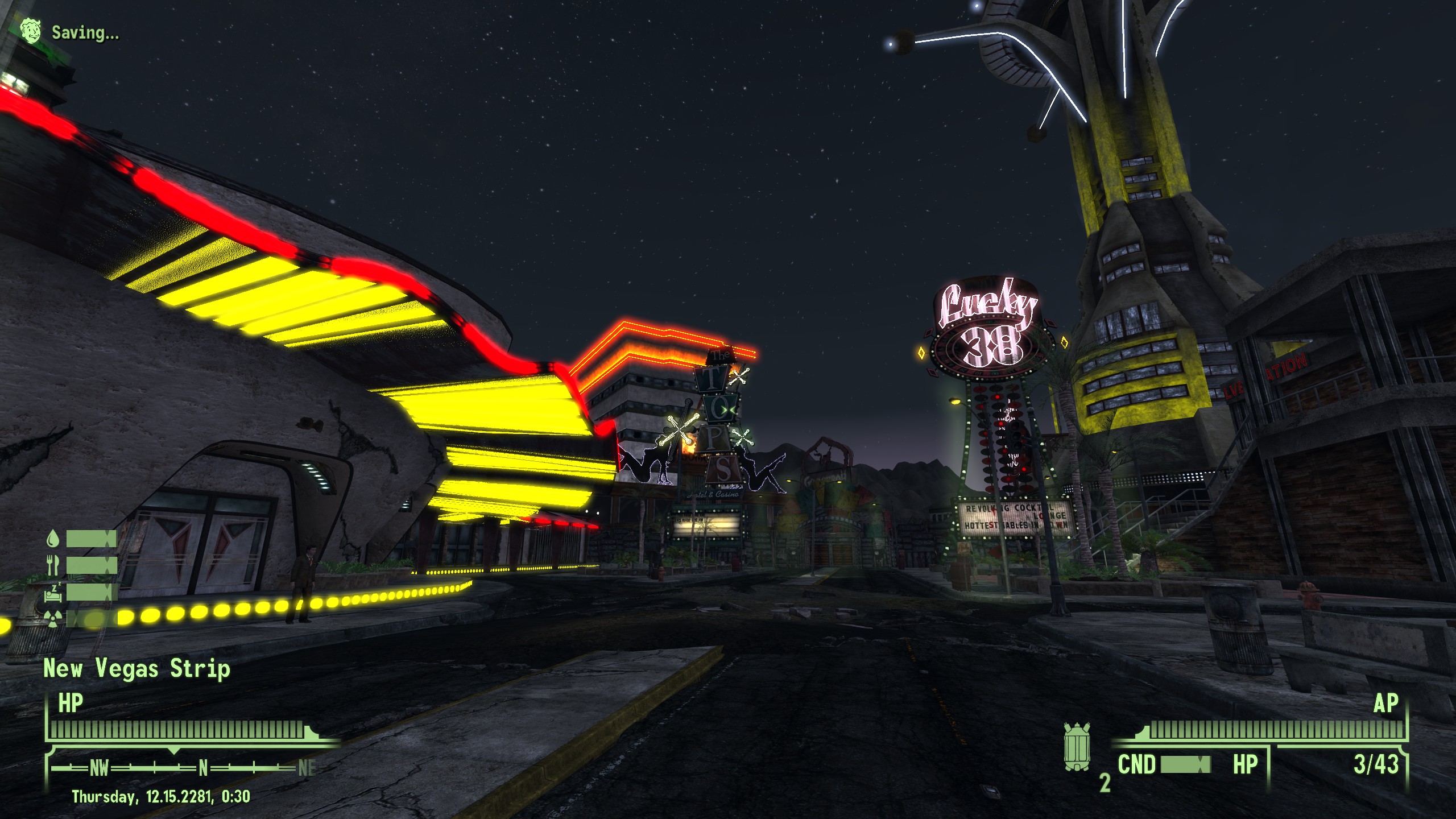
I enjoyed revisiting the Capital Wasteland but by the time I finished, I was really ready to be finished with it, which is odd for a game I ostensibly adore. I’m happy to chalk that up to the anticipation of being able to play New Vegas though. So I completed the main quest line and boarded the train at Union Station to the Mojave Wasteland. A message flashes on the screen letting me know that three years have passed, after which the intro cinematic for Fallout: New Vegas starts. What else can I even say about Fallout: New Vegas. The writing is consistently excellent throughout and this time around I paid special attention to the politics of the NCR and the Legion. I’m usually an NCR fanboy and breeze past the dialogue which talks about the bureaucracy and corruption plaguing the NCR back in the home states. I’m ashamed to admit I’d never even heard the dialogue with Ranger Hanlon at Camp Golf about the over-extension and mismanagement of NCR forces. The Legion were under-developed due to the short development cycle of the game but what is there is good. The Legion are misogynistic slaver pricks, don’t get me wrong, but members of the NCR themselves often talk about how safe it is to trade and live in Legion territory. Something people might be willing to trade their freedom for. Then you’ve got Caesar himself who brings up that it was governments like the NCR that led to the destruction of the world in the first place and it’s a really salient point.
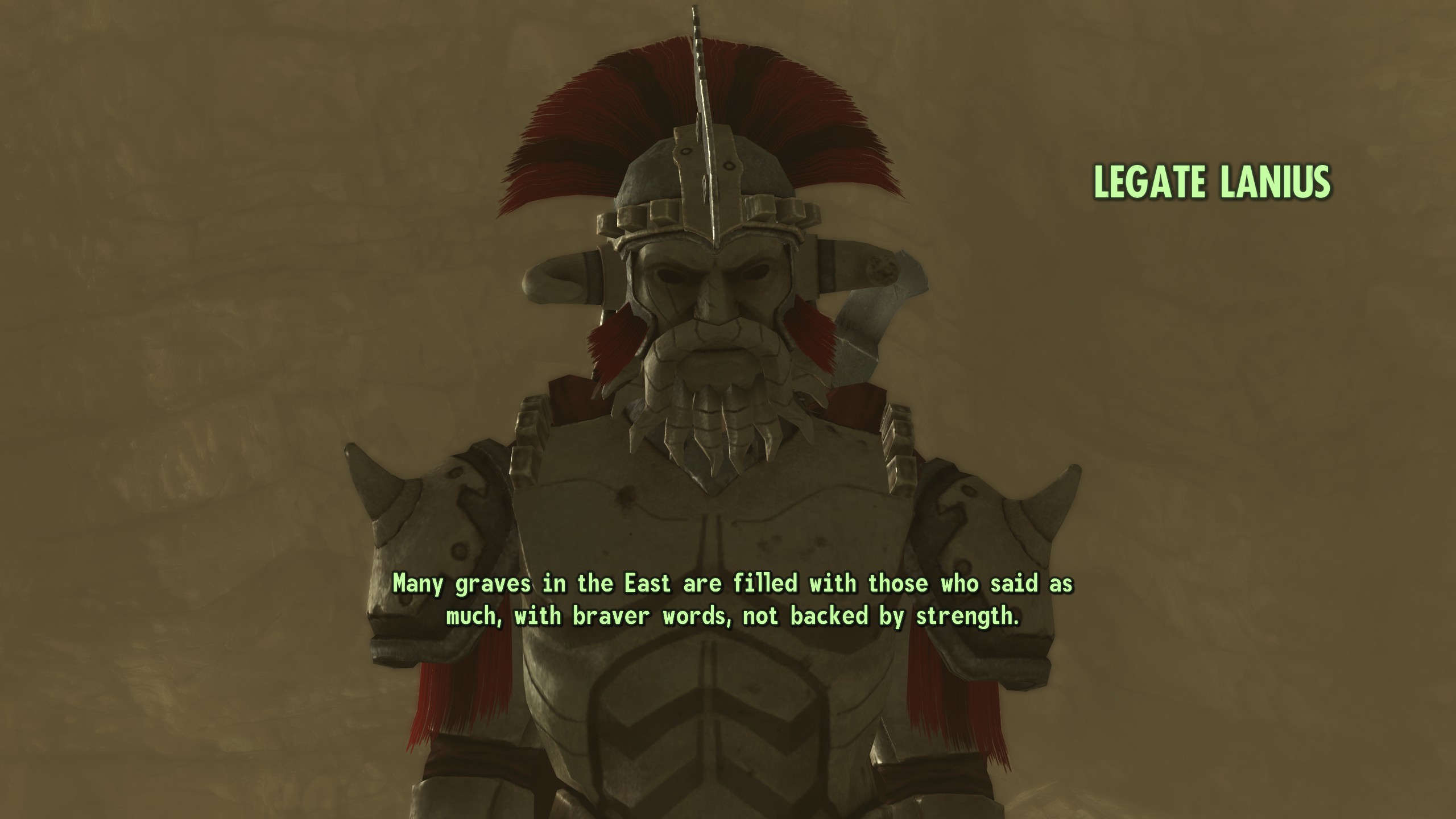
The side quests are all great with a unique cast of supporting characters; and a mix of absurd and weighty stories that deal with everything from crazed super mutant radio broadcasters, installing a robot as the new sheriff for a frontier town, fixing up some old rockets for a cult of religious ghouls or raising a centuries-old bomber from the depths of a lake for a society of weapons obsessed maniacs. The narrative design for New Vegas is so creative and ambitious, it’s still such a delight to just be a part of the world they’ve created and even with all of its absurdity it feels remarkably relatable. The gameplay builds off of the formula left behind by Bethesda’s framework for Fallout 3 with the additional features I mentioned earlier. At release, New Vegas was about as stable as a horse with four broken legs, but with a slew of engine-altering mods it works like a dream. Fallout 3 was a diamond in the rough, New Vegas is that diamond polished to perfection and presented on an 18-karat run of bad luck. If you haven’t played it yet, what are you waiting for?
Chip in with a round of Fallout: New Vegas, right here
Dead of Darkness
Dead of Darkness is available on Steam.
Another notch in the belt of Resident Evil inspired games, Dead of Darkness is a top-down pixel art survival horror with resource management, puzzles galore, horrific enemies and not just one extravagant Spencer-like manor, but several to explore. Dead of Darkness joins games like Crow Country, Signals and You Will Die Here Tonight in the resurgence of the classic survival horror genre and like those other games there’s a lot that’s familiar but also some fresh ideas that refine the formula and give it a unique take.

Dead of Darkness takes an almost open-world approach to its world design, with several intricate areas to explore connected by an overworld map. It’s similar to Resident Evil Village with the core difference being that you’ll often find yourself coming back to areas you’ve been to before with new tools or keys to access areas you couldn’t crack into before. The game creates a lot of intrigue this way and you’ll find yourself often making mental notes of areas you might want to come back to later. There’s a clue system in the game, which is thematically relevant given you play as a private detective. Clues are discovered by interacting with objects in the environment, notes you can find strewn about the place or speaking to other characters. Given the technical fidelity of the game and what could be accomplished with its style and perspective limitations, the clue system is a great way of adding depth to the puzzles you have to solve. You can even combine clues with other clues or items you kleptomanically add to your inventory.
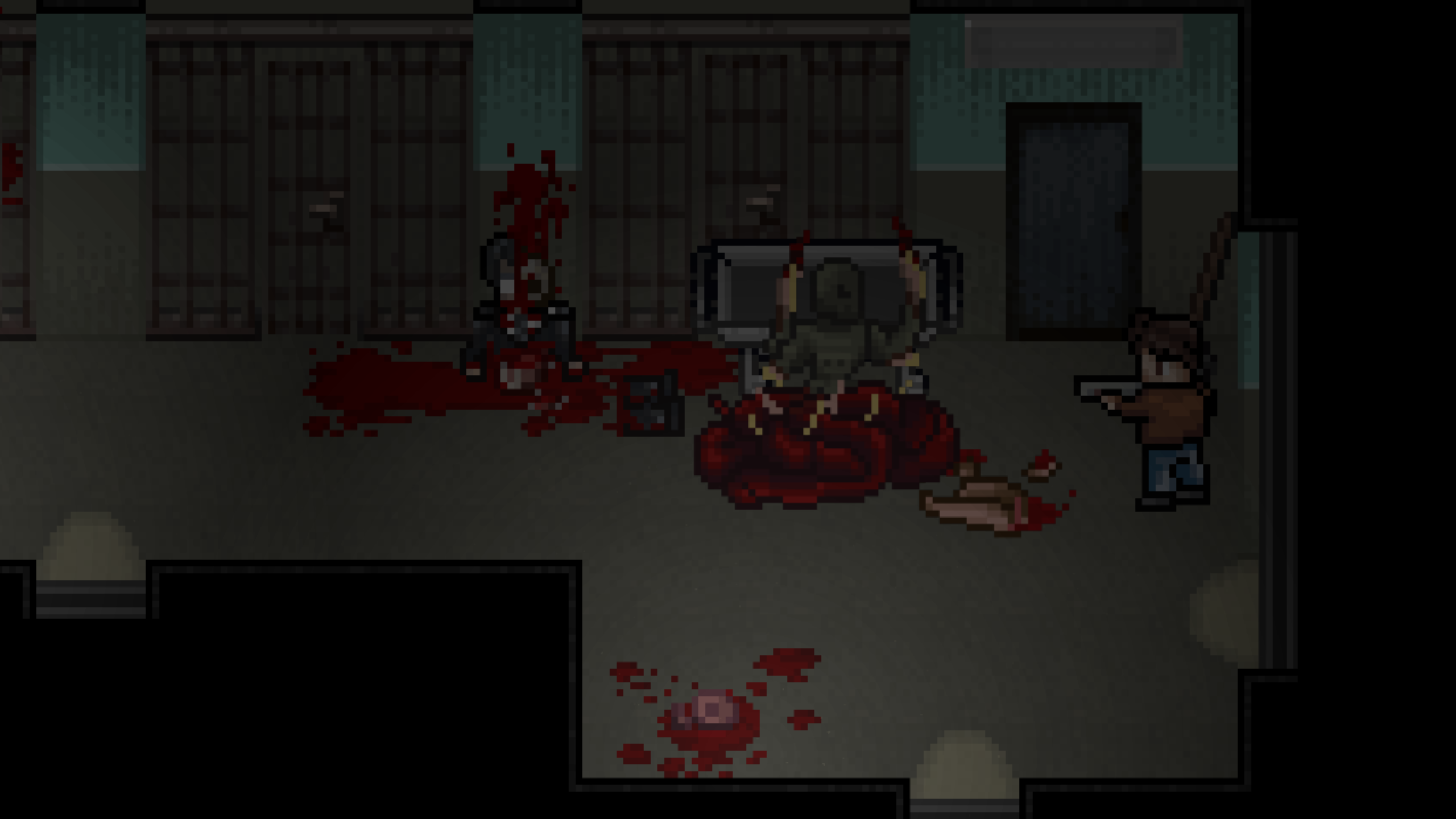
Dead of Darkness wasn’t too challenging for me, I played on hard difficulty (the highest you can play on until beating the game at least once) and I was able to get through most encounters largely unscathed by kiting enemies or in the worst case scenario taking a chomp to the throat before quickly running away like a big damn hero. Resources are at times plentiful and then at other times extremely scarce, it’s like riding a roller coaster and despite the combat being fairly easy I did clench hard enough to make diamonds a few times when you leave a boss fight with no ammo, no health items and a metric fuckload of piddly basic enemies between you and your next objective. The game also tracks your mental state but I for one never really noticed a decline in my mental state as far as the game was concerned. If it was tracking my mental state then it vastly overestimated me.
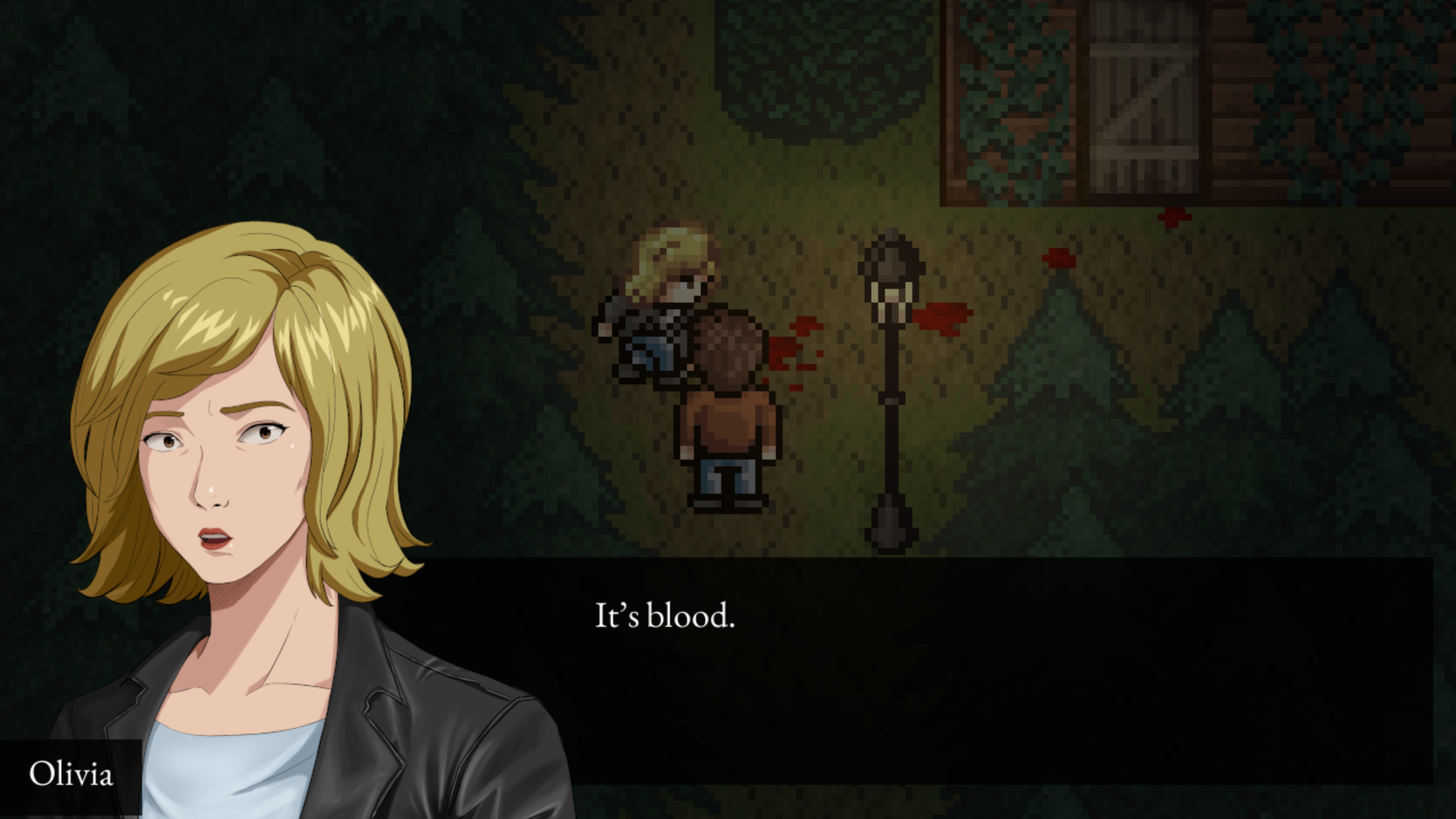
Another unique addition this game has over some of its contemporaries is that it is fully voice-acted. The voice acting is stellar too, which is unusual for a game in this price bracket. The writing is mostly fine with some bits falling a bit short but you’d hardly even notice since the performances are really convincing and the actors realise their characters very well. The story isn’t anything too special but it’s told well and is suitably horrific. As a debut game for the developer, Dead of Darkness is a strong start with hopefully more to follow in the future. If you’re a fan of classic survival horror and six-slot inventories, this game is well-equipped to lead you through the Dead of Darkness assuming you still have room for the lantern.
Pick up Dead of Darkness like you do with every other loose item in a survival horror game
Blade Chimera
Blade Chimera is available on Steam and Nintendo Switch.
This was a tough one for me. On the one hand, Blade Chimera is an innovative Metroidvania that puts the player’s freedom of exploration at the forefront. A lot of similar games will let you waltz around their inter-connected open-worlds with tantalisingly off-limits areas you’ll have to come back to at a later time with new abilities. Shit, the game I just wrote about does exactly that, but Blade Chimera gives you most of the tools you need to explore its world straight away. At times that freedom can be great, but the structure of the game’s story and missions are still linear meaning you have the freedom to explore anywhere but not necessarily to do anything when you get there. This happened to me quite a few times while playing.
While the freedom is refreshing in the genre, I also feel that the level design was lacking a bit. A lot of screens in this game are long, flat hallways filled with the same enemies. Different areas will have different enemies but most screens will only have one or two enemy types which usually don’t have much synergy with each other. So you sort of blitz through each screen mashing attack buttons and never really needing to be careful or form a cohesive strategy. Not all areas or screens are like this but there were enough for me to take notice.

That’s quite a bit of negativity straight off the bat, and I really don’t want to make it seem like it’s all bad. There’s a lot to like about Blade Chimera. For one thing, it’s absolutely gorgeous. The pixel art is vibrant and detailed, with a range of lighting effects applied to environments that can create really beautiful moments where characters are edge-lit by neon lights leaving just a silhouette. The UI and game feel are well developed too, levelling up for example, slows time down to a crawl after you’ve just killed an enemy and a slick UI animation plays telling you your new level. Movement and combat animations feel fluid and responsive, especially when you’re using a giant ass cleaver to deliver swift annihilation to the rank-and-file demon creeps you’ll come across. It elevates the combat a lot, which is desperately needed because without these satisfying animations and feel, the combat might be a bit too basic. Rather than a Metroidvania, I’d say it falls more towards spectacle fighter, just needs a bit more spectacle. I’d love to see enemies get sent flying after I attack them, or for them to do anything other than slowly crumble into dust after they’ve been defeated.
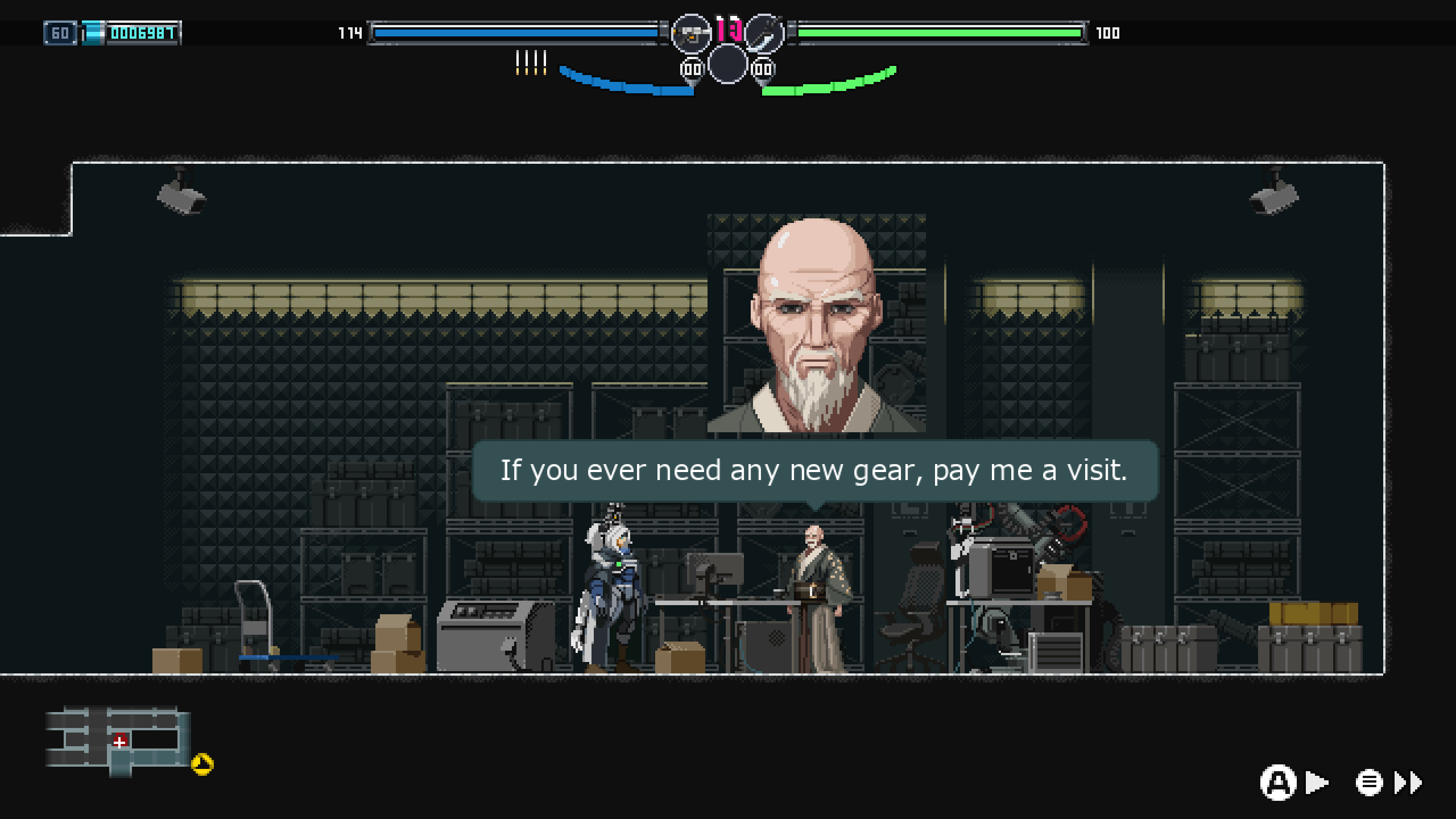
The game linearly delivers its story, as discussed earlier. It’s not a bad story, it’s mostly well-written and refreshingly straightforward without an over-reliance on lore dumps and expository logs or journals like some other games in the genre. For the most part, the game just lets the world remain unexplained which is the best thing a game can do sometimes. I don’t really need to know why demons exist or why my ghost sword can talk, the story is propelled forward by character actions and world events that happen in real time. The game metes out lore on a need-to-know basis and I don’t need to know. It’s hard to make a recommendation for Blade Chimera because it’s a bit of a mixed bad. The question is does the good outweigh the bad? I think it does. I think that the ideas explored in Blade Chimera–especially its world design and approach to exploration–are well worth the occasional misstep. What I really hope this inspires is a more refined sequel with more creative screen layouts, more energetic combat and enemy reactions/routines, and an extension of that open-ended philosophy applied to the world, to the narrative and mission design. What I’m trying to say is, Blade Chimera is a good game and with a bit more fine-tuning it could be a fucking excellent game.
Ram your ghost sword into a ghoulie in Blade Chimera, right here
That’s a wrap for January 2025. February looks like it’s going to be a colossal month. Not only is Civilisation 7 coming out, which will dominate my life for the foreseeable future but so is Avowed and Date Everything! One of these games is not like the other, but I’m keen as a bean for all three. There are also a few more games from January that I want to check out, notably Butcher’s Creek and Mark of the Deep. It’s going to be a busy month but who can complain with so many excellent games to play. I hope you found something you liked in this month’s roundup, or let me know what kept you busy in January over on BlueSky. Until next time, thanks for reading!